Just posting Grover’s video overview here:
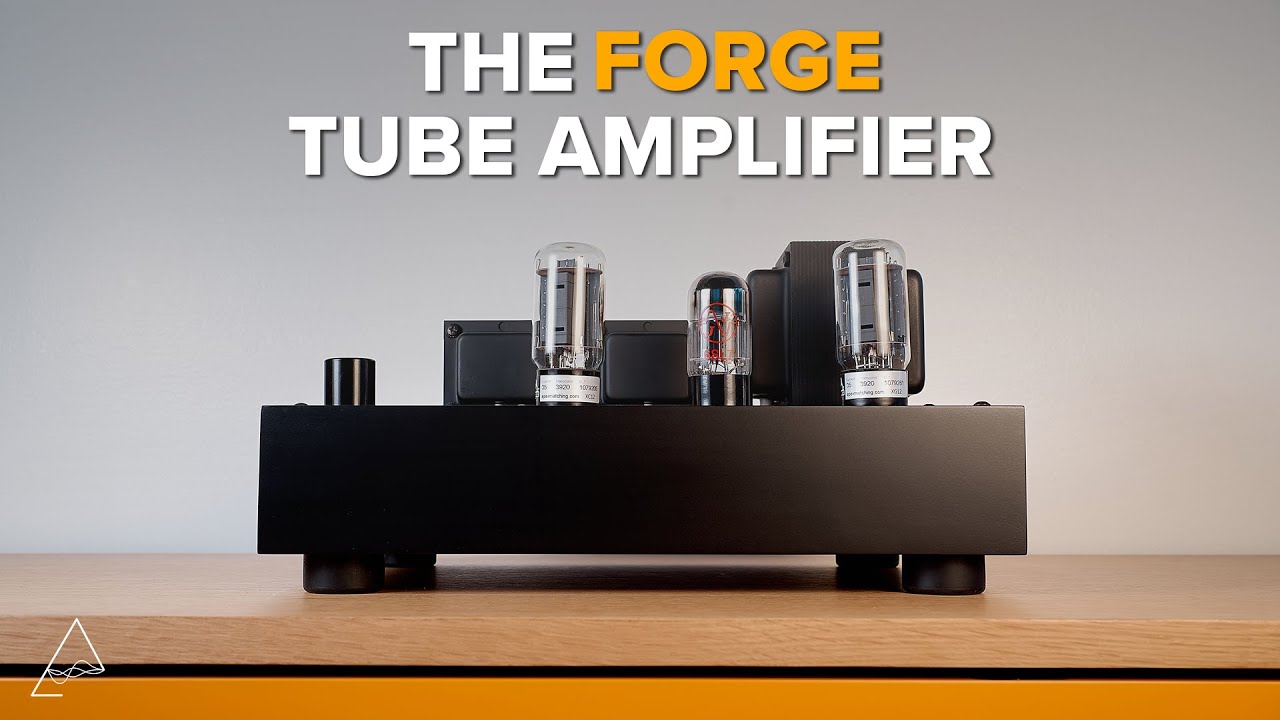
Some good info and impressions ^
Just posting Grover’s video overview here:
Some good info and impressions ^
Hi all,
Here’s my review for the Forge amp. It’s a long one! Sorry for that, but I hope you enjoy it.
Measured noise floor between 24 and 29 dB spl.
Both amps level matched to 70 dB spl.
Amplifier A/B comparison setup:
PC w/ Roon > Schiit Yggdrasil A2 / Unison USB > AudioQuest Cinnamon XLR cables > Schiit Freya S > AQ Golden Gate RCA > Forge & Second Amp > Headphones
PC w/ Roon > Schiit Yggdrasil A2 / Unison USB > AQ Golden Gate RCA > Forge > Headphones
ZMF Verite Closed, Aeolus, and Auteur, Focal Radiance, HD650, Meze Empyrean
I have heard quite a few tube amplifiers in this price category, and I believe it’s a difficult niche to compete in. This is basically the entry segment of the really high end tube amp world. Amps generally on the same level would be one of my favorite amps, the Eddie Current ZDS. That is an amplifier I greatly regret selling. I enjoyed the ZDS’ more flavorful presentation compared to that of it’s big brother, the Aficionado. Both do the technical aspects of music reproduction extremely well. Some other amplifiers in this price category, like the Felix Elise, did not wow me at all. Others, like the ZMF Pendant and Glenn OTL, were excellent all-rounders that justify their price tags with above average technical capabilities and/or extreme flexibility. Then there are iconic amplifiers like the Donald North Audio Stratus - exceptionally well performing in nearly every way. While I’ve heard many more amps than the ones mentioned, I think this paints the picture well enough.
This Forge unit came with 32 ohm and 100 ohm headphone output taps, the Low Z and High Z TRS jacks respectively. The stock configurations available on production models should be 8/100ohm and 32/300ohm outputs. I did confirm with Taron that the loaner unit’s components, aside from the output impedance difference, are the same as production model Forge units. That means the same Jupiter caps, the same build internally, etc.
This demo Forge was accompanied by a full set of JJ tubes - JJ 6SL7 input, JJ EL34 power, and JJ 6L6GC power tubes. It is able to run a very wide range of power tubes to fit your power needs, including the well known KT88 powerhouse.
I must confess, I was hesitant to write a review about Forge using new production tubes. I’m more of a NOS tube guy, and one of the first things I start doing when purchasing an amp like the Forge is determine how quickly I can get some synergistic vintage tubes into those sockets and relegate the stock ones as backups. The Forge is the first amp where I’ve truly enjoyed the sound of new production tubes. I feel they synergize well with the capabilities and natural character of the amplifier, and I would urge prospective buyers of the Forge to hear these before they go searching for NOS glass - you may not need it.
I was curious about how the KT88 truly sounds, and as the JJ KT88 is (I believe) the stock tube provided for the amp, I went ahead and purchased (with my own money) Apex matched JJ KT88 and Genalex Gold Lion pairs. If you are driving an HE6, you probably want to go up to the KT88 for that extra bit of juice, although I’ve never needed more than 20% of the available range of the volume knob regardless of which output tap or tube combination I was using. The exception was the 600ohm Beyerdynamic DT880s, which required turning the dial about 40 to 45% of the available range. As I went up the tube order (EL34 to 6L6 to KT88) I found that the power and impact of notes also increased, with some headphones gaining a hard edge to them with the KT88. For this reason in particular, I think the 6L6 is the best all around choice here for nearly every headphone pairing. Sonically, it provided the energy, power and clarity I wanted without seeming to push anything too far. The EL34 did an admirable job with the Radiance, and it’s softer tonal character seemed to reign in the hard-edged impact of the Focal house sound and provided a more natural and liquid character. What made the EL34 great with my Focals did not play as well with the Empyrean, ZMFs, or even the HD650 where I enjoyed the more forceful sound of the 6L6.
Sonically, I would categorize the Forge as an amp that has a moderate euphonic emphasis and a relaxed but liquid treble. It has an above average sense of stage width, and fairly good depth. The Forge has a very good sense of impact and punch, and in many ways rivals or beats other amps in this price category in that regard. While the detail retrieval is also good, it’s more relaxed nature does make it sound a bit more mellow with some headphone pairings than some may enjoy. I should also point out that this may be a good thing for some headphones, and I can see how ones that have slight to excessive treble emphasis could lead to very good synergies with the Forge.
As I said, of all the tube types I tried, my recommendation is the 6L6. There are plenty of tube options here for every use case, and this versatility is great to see in this market segment where the manufacturer will typically only support and/or recommend a narrow range of tubes to roll. Of course, ymmv, and I’m certain various NOS EL34, KT88, and 6L6 tubes will have different sonic characteristics to suit many preferences. I think my ideal tube pairing would lean toward NOS 6L6 valves that are more analytical and airy to bring balance to the naturally warmer Forge characteristics. Bass and mids are the star of the show on this amp, IMO.
I only have one tube amplifier that sits roughly in the same tier as the Forge. This made comparisons easy and difficult at the same time. So please bear with me on these, as I’m sure it will seem some of the following comparisons are quite academic or trivial. Thanks.
There is a pretty straight forward timbre difference here between the Forge and the SW51+. The Shortest Way 51+ is a leaner sound that sets its sights at neutrality without sounding dry or sterile, and holy crap it hits pretty darn close to the mark. That’s quite a feat for such a tiny amp! Unfortunately, it does suffer from a bit of roll off at the farthest ends of the bass and treble areas. Despite being a transformer coupled amp just like the Forge, direct comparison reveals SW51+ is not really in the same league. Beyond the obvious, like how those big iron transformers cost a lot more on the Forge, and power output is far greater to boot, sonic differences are just as apparent. The Forge is more impactful, better extended, reaches farther into the detail, and, well, it just kind of wins here. So, while the SW51+ does punch FAR above its weight class, it doesn’t punch this far up. It was fun to compare the two and see what limitations the underdog had, and where the Forge (handily) beat it. While I generally prefer the SW51+’s more even and accurate tonality with several headphones like the Aeolus and Empyrean, and to a lesser degree the Radiance, it’s clear that the bigger iron and glass on the Forge just hammers the 51 flat with better overall performance, power, detail retrieval, stage, imaging, impact… I could go on, but it feels like I’m beating on someone else’s kid here, so I’ll stop. The SW51+ is about $400-ish USD the last time I checked. It is still one of the amps I personally recommend the most due to its price to performance ratio.
I’ll keep this one brief. I don’t think there’s much competition from Schiit here. Forge wins in overall timbre, staging, imaging, detail, dynamics, and nuance. Going from the Forge to the MJ2 was almost shocking. Everything collapsed around me - staging, detail, euphony. MJ2 makes the tracks from my playlist by Infected Mushroom, Lorde, and Yello really fun to listen to because everything sounds so visceral. It certainly surprised me when I found that the Forge keeps up in that department. Forge also sounds more dynamic and holographic while doing so. I still consider the Mjolnir 2 to be the OG tube-hybrid King of Slam, so it’s very good to see the Forge keep pace as closely as it did with what Mj2 excels in. Sonically speaking, the full tube and iron design of the Forge beats Schiit’s glass and sand hybrid amp in exactly all the places it should. Compared to Forge, the Mjolnir just sounds unexciting and flat, with a less natural timbre and a narrow stage.
For many of us, the Crack is the original tubey, gooey sound that comes to mind when people think of OTL amps. There’s plenty to love about the Crack. It has an ability to encase you in a cocoon of liquid and euphonic sonic bliss. Having listened to a large number of Crack competitors, it’s clear to me that the Crack w/ Speedball is still far and away one of the better budget OTL amps you can get. Despite this, the Crack is not meant to sound like the Nautilus, Aficionado, Stratus, and Forge amps of the Audiophile world. (And that’s ok!) So, it’s not just an apples to oranges comparison against the Forge, it’s an apples to watermelon kind of thing. The warmth of the Crack fails to bring the clarity and dynamics that the Forge has. While the Crack seems a touch more euphonic, it loses to the Forge in technical areas like head-stage, instrument placement, detail, power, and in certain areas timbre. It is also limited to high impedance dynamic driver headphones, where the Forge can drive pretty much any headphone you may have.
Ok, here is where we get down to brass tacks. A real head-to-head comparison. I’m going to nitpick everything I can to try and express the differences between these two. Keep in mind, the Stratus is several thousand dollars more expensive, and a very different circuit and component design to the Forge. It is also easy to overstate differences, which I will try not to do.
To make sure there was an even playing field, I put the stock tubes into the Stratus for a more stock vs stock comparison. The Stratus is running two new production Psvane 2A3B power tubes, one 6N1P-EB (which I believe to be a Voskhod Rocket) input tube, and a Winged-C 5U4G rectifier - all of which are the original tubes supplied by Mr. North.
I think both the Forge and Stratus can both be properly categorized as more “musical” amps versus the cleaner and more analytical competition, like the EC Aficionado. I would say the Forge has a more euphonic and intimate sound than the Stratus. While I think the Stratus does outperform the Forge for my preferences, I also think that the Forge did not embarrass itself in any way. The improvements, while noticeable, are also very synergy dependent. I hypothesize that If I had a pair of Anandas or RAD-0s on hand when doing this review; the battle might have swayed more in the Forge’s favor. I don’t know that for sure, but it would have been interesting to find out. Anyway, continuing on…
On “Giorgio by Moroder” by Daft Punk, let’s go to the time 6:57 in the track for a bass comparison. It is easy to hear the bass guitar playing each note and the texture of that bass really comes across. You can hear the little pauses between notes, and hear that subtle growl each note has. The bass of the guitar, drums, and synth are all clearly distinguishable here. Easy mode. Even a caveman can do it. However, back the song up to 5:45, and when the bass guitar starts going like mad, and more instruments start to come in, by 6:08 the bass guitar texture and detail can get shuffled to the background and be a bit lost. During these busy times in the song, the Stratus will continue to present that bass texture and growl more distinctly and with better instrument placement on the stage. The Forge keeps the bass guitar and drums more ‘alive’ by presenting it with more quantity and with a slightly more visceral feel. Is this a failing grade on the part of the Forge? Absolutely not. Reality check time: The Forge out performs my other amplifiers (Mj2, Crack, et al.) far more than the Stratus is outperforming the Forge in this example. So overall, Forge is a big step up from those amps, where the Stratus is a smaller step from the Forge. I would say for bass, the Forge is performing extremely well.
The Forge presents midrange in a way that is similar to the Stratus, but with more emphasis and a bit of that glorious tubeyness we want. It doesn’t bring the last bit of detail retrieval or instrument placement that the Stratus can, but seems to focus more on sweetening the tone of instruments. I quite enjoy that, but again, preference and synergy is key. One minor nitpick: The mid transition into treble on the Forge can seem a little bit uneven at times on specific tracks. It was not apparent until I made several repeat and direct comparisons. For example, on “God’s Gonna Cut You Down” by Johnny Cash there is a stringed instrument in the left channel which rings with a subtle harshness on the Forge that just doesn’t come across as harsh on the Stratus, despite the Stratus having more treble quantity.
On “A Thousand Years” by The Piano Guys, the Forge’s slightly more lush and full midrange does play well to my preferences. Each instrument has a touch of etherealness to it, but is still presented in a well defined space, and on a nice stage. Let’s say, 2nd row. The cello sounds very good, with oodles of character and feeling. In contrast, the piano does seem to lose some definition on the trailing edge of notes compared to Stratus, but it’s a bit more rich and smooth presentation that I can’t fault, and actually kind of prefer. I think hard core purists of piano music will probably yearn for the clarity and stage of the Stratus, where you get the feeling of being farther back (about 7 or 8th row) but seeing as I don’t listen to this genre much, I can only guess.
“Lullaby of the Leaves” performed by Beth Hart and Joe Bonamassa is more in the Forge’s wheelhouse. The rich bass and piano melody backing Beth’s vocals, a slight emphasis on her liquid and vibrato singing, with energetic guitar licks… wow, this conveys good feelings when listening to the song on the Forge, and for better or worse it gives you more gravy for your potatoes than the Stratus does. I think Forge takes the checkered flag on this song. It is not a runaway win though - snare and cymbal hits do sound more defined and true to life on the Stratus, and the raspy qualities of Beth’s voice comes through with a bit more texture. Honestly, listening to music isn’t always about detail for me, and I think the “feel” of the song is better on Forge.
“Can’t Stop the Bleeding” is a genre-blended collaboration from Tom Morello, Gary Clark, Jr. and Gramatik and it is one of my favorite songs. The song is energetic, fun, and brings together bits from my favorite genres: Blues, Rock, and Electronic. The midrange liquidity and thumping bass of the Forge just works so well with energetic music like this. My usual complaint about this song is that the highs, lows, and mids seem to compete too much with each other in the mix, and they all want to be pushed in your face all at the same time. The Forge did a good job in keeping everything alive without being pushy about it, but I miss the better depth of instrument placement I hear on the Stratus. Regardless, this is a great track for this amp.
I think a comparative sonic trend has definitely developed here. Both are different presentations on euphonic sounding amps. The Forge has a more flavorful sound while the Stratus is a bit more on the liquid but detailed side. My overall feelings are that Forge ‘just works’ with Rock and Roll, electronic music, and other more contemporary genres. I was going to break down what I heard on the following tracks, but to keep the review limited to a sane length, I’ll just summarize by saying these were all very enjoyable listens on Forge. “Snow (Hey Oh)” by Red Hot Chili Peppers, “Foreplay/Long Time” by Boston, “Royals” by Lorde, and “Brothers In Arms’’ by Dire Straits. I’m going to hazard a guess that the Classical and Jazz nuts would have a really good time listening to the Forge, but something also tells me that they might eventually wander over to Camp DNA and pitch a tent.
The headphones I gravitated to the most on the Forge were the Auteur and Verite Closed, with runner up going to the Focal Radiance.
The Verite Closed was an excellent synergy as the combination of the speed and impact of the Verite with the euphony and power of the Forge were extremely complementary to each other. I think this was the most engaging sound and experience I had with the Forge. Deadmau5, Beth Hart, Lorde, Darkside, The Piano Guys… they all captured my attention and had me involved in the presentation. Stage was wide and deep. The clarity and speed were natural and brought your attention to details without screaming “look at me, damn it!” and being too insistent. The engagement factor is just very high with this pairing, and I would say it is more of a lean forward and pay attention kind of experience, and less of a lean back and drift away kind of experience.
For ZMF’s most neutral headphone, the Forge brought the Fun to the more reserved Auteur party, especially with the 6L6 and KT88 tubes. I greatly enjoyed how SRV, Buddy Guy, Joe Bonamassa, Van Halen, and other electric guitar focused music just rang with life and feeling with this combination. Nils Frahm’s album “Spaces” was stellar on this chain, completely engaging and engrossing, making the outside world just fade away. You could feel the soul of the music, and sink into a sonic nirvana. While the VC was engaging, this pairing is more of a “get carried away by a sea of music” type of presentation, with nothing to startle you awake from your trance and nothing to grate on the nerves or break you away from the excitement.
Focal Radiance. Let me make one thing clear: The Radiance does NOT need an amplifier to bring more bass or impact to the party. It has plenty of it’s own on offer. It also doesn’t need an amp to overemphasize detail. While the KT88 sound was straight up pushy and irritating, running the smoother sounding EL34 tubes on the Forge portrayed a more controlled and less excitable / insistent sound, and did this better than any of my other amplifiers. I feel this is a very welcome difference. While I enjoy the sometimes-over emphasised impact and “look at me!” characteristics that Focal headphones will bring with some rock and electronic music, there are just times where it’s too darn much. The Forge tamed that a bit without killing the joy. I think that’s a hard thing to do, because on the other amps I’ve heard which reign in this quality, they can go too far and sound dull or flat, and sometimes just unexciting or unresolving as a result.
The headphones I thought were good (but not great) pairings with the Forge were the HD650 and ZMF Aeolus. I definitely did not hate these headphones when paired with the Forge, but the others just kept grabbing my attention and pulling me back because they offered better synergy for my taste. The HD650 “veil” isn’t all that apparent on the Forge (which is an excellent thing), and the head stage and imaging is also very nice. Treble and bass extension could use a boost, but that is a repetitive and age-old nitpick for almost every 650 evaluation I’ve done by now. Honestly, despite sounding quite good, the Focal and other ZMFs just do it better.
While I really loved the drive that the Forge had with the Meze Empyrean for EDM and Trance music, I felt the relaxed treble just didn’t bring out some characteristics of the Blues and Rock & Roll that I came to expect from my other amps. So, unsurprisingly, the Meze Empyrean was a bit of an oddball here. There were some tracks where I was mesmerized by the smooth sound of the bass and midrange, and yet other tracks had me put off by a nasal or hollow character in the upper ranges that was just… wrong. I think anyone who has owned the Empy can empathize: It is really picky with amp pairings. I think Forge + Empy is more hit than miss here if you like a buttery and warm sound, but it was rather jarring to go from Great to WTF from one track to another.
I think the Forge is an excellent performing tube amp. Sonically, I think it brings euphony and musicality without going into gooey/mushy territory. Compared to the ZMF Pendant, I feel the Forge has better technical ability with it’s stock tubes in the areas of presence and impact, texture, and musicality. These qualities can be found in the Pendant, but I had to struggle with very specific tube selections to bring those to the fore. I think the Pendant’s more even and clean tonality may pair better with more ZMF headphones, but you’re going to have to do some serious tube rolling to get you there, and it is dependent on your preferences of course.
I also feel Forge does a much better job of bringing a warmer tube sound to listeners than competitors I’ve heard like the Felix Elise. The Forge doesn’t get mushy, lose texture and detail, and is ultimately much more resolving than the Elise could ever be from my experience owning it. But then again, I feel that the warmer sounding Felix amps are just different beasts intended for different preferences and chains, so take that with a grain of salt.
Compared to more analytical sounding tube amps, the Forge does lose out on the ultra defined resolution and clarity, and probably with soundstage too, but I don’t think customers searching for that kind of analytical sound is the audience Forge is aiming for.
Generally, I think headphones that are fairly neutral in timbre would pair well with the Forge. Also, headphones that need something to provide a more present and liquid midrange would be great pairings with the Forge. I really wish I had the RAD-0 during my time with Forge. As pleasant as the RAD-0 / Stratus combination was, I think the Forge might fill in what the Stratus couldn’t - a more lively bass and mid presentation, or as I like to say, more gravy for the mashed potatoes. Because of this, I think many HiFiMan headphones would also be excellent matches, as well as a few Audeze. Roll over to some more appropriate tubes, and I think the Utopia and Clear would be great for users who find them a bit metallic or shouty. The headphones I own tend toward being a bit warm to begin with, and the more neutral or treble emphasized of those were the ones that paired best with the Forge.
Thanks for reading.
OK, so… I guess everyone needs this section now, so here you go… I received the Headphones.com/Amps&Sound Forge amplifier from Headphones.com for testing and review only. I was not compensated for this review in any way, and all thoughts are my own, and nothing written here was influenced by others. The Forge I am testing will be returned to Headphones.com at the end of the review period. Super Extra Full Disclaimer: I’m not sure it matters, but I’ll disclose it anyway - I spent my own money on additional tubes to complete this review, and am not being compensated for that either. I’ll send those along for the next reviewer to enjoy. So, really, these actually are my honest and truthful opinions. Ok, thanks.
Edit:
Stream talking about the Forge and misc stuff.
Great review mate, it was a pleasure to read it.
What a well written review brother! I enjoyed reading it all, and found many similarities to experiences I had with the Mogwai OG which the Forge is based on. Excellent stuff and love your music choices. It sounds like it would be interesting to compare the AmpsAndSound Bigger Ben to the Stratus!!!
Thank you, your review made for a perfect Sunday morning read with my coffee. It was also very helpful, not just for understanding the Forge but for also getting a sense of how other amps relate to it. Thank you for taking the time to offer such detailed impressions and comparisons.
I know you’re not a fan of the HD 800 SDR, but the forge also sounds as though it would pair well with brighter headphones like this, the HD 600, and the Clear (as you note at the end). For someone with these headphones and who’s saving up for a Vérité, this is a very tempting amp!
I’m telling my little, newly arrived SW51+ not to pay any attention to the bad man 
Thanks also for introducing me to some new tunes!
Confused, do you mean the Stratus is several thousand more expensive than the Forge or the other amps you were comparing the Forge to (which is what I think you mean)? Forge and your version of the Stratus are essentially the same price, are they not?
Good review. Well thought out and presented.
Yeah I think the V3 Stratus and the Forge are only around $750 dollars apart, although I think he might mean the price you are able to get a Stratus for now since the V3 are not available.
Possibly. Forge is about 2800 and wasnt that Stratus 3k? Perhaps I’m misremembering.
I am unsure, it might be $3k for the Stratus. I thought it was $3.5k, but judging from cost of Audio Note Transformers he uses, $3k is probably more likely of a cost based on the cost increase delta.
Afaik, Stratus is $4.5k now.
That’s an upgraded version that’s more expensive than previous ones.
Did you listen to that one? I thought yours was the previous version? There’s only one of the new versions in the wild so I thought you were comparing it to your own.
Wow an absolutely cracking review @ProfFalkin. A real pleasure to read and I thoroughly enjoyed what I deem your expert analysis of the amp and it’s competitors. I wish you would do more writeups. Lol, though I know how tome consuming they are. Thanks Prof for a great read.
To answer your questions: I am giving current prices for new amps. The amps compared sonically were the Forge (obviously) to the pre-$4.5k version Stratus. FWIW, I paid around $3k-ish for my Stratus, new, last year.
Unfortunately, I’m not able to review the $1800-ish Mogwai OG* to my $3000+ Stratus, nor am I able to review the $2750 Forge to the current $4500+ Stratus to ensure that model year types line up for “more accurate comparisons and less misleading” content in my review. (To the person I’m quoting, you know who you are. No, it wasn’t Perogi.)
The sonic comparisons I made stand on their own, and I stand by each word I typed.
As for the pricing amounts I quoted, if you are a customer looking for a new amp, the prices I stated in my review are accurate to the best of my knowledge and should be considered as something different from the products that were reviewed sonically. I can see how that might have been confusing, which was not my intent.
And before the point is raised (again) that used prices will differ from what I quoted… Uh, yeah. Duh. That’s a flawed point to use in the first place.
So, for the DNA Fanboys out there (especially the one that keeps messaging me), I’m sorry I besmirched whatever glorious ideals and biases you may have held for DNA products, but I’m not going to rewrite my review to satisfy your egos for a product that doesn’t need defending in any way shape or form in the first place. Period. End of discussion.
Thank you.
(* Or whatever the old Mog OG pricing was.)
Thank you, I appreciate it. 
For what it’s worth, I appreciate your thoughts regardless of the nickles and dimes. I like to hear peoples opinions and then form my own. I may never own a DNA but who knows with me. I personally think the Forge sounds like a good price point you can have now without waiting 2 months to a year or more. I’ve enjoyed A&S and I think they have they’re niche in the market/hobby.
Side note, I really like that A&S uses common tube types in my opinion that are readily available and a lot of NOS options.
Fantastic breakdown of the amp’s sound. Do you have a preference for low or high z out?
Thank you.
I did mess around with it a little bit trying to figure out if there was much of a difference. On this specific unit, the changes were minor.
For this unit the output impedance is fairly close on each output - 32 and 100 ohms. 100 isn’t that far above 32, which I surmise is why there wasn’t much of a change sonically between the two. On standard production units where 8/100 and 32/300 z outs have a much larger ratio between output impedances, I hypothesize you’ll get a little bit more of a difference.
Having 32 and 100 ohm outputs does have an interesting quality in that it keeps the damping factor between 1 to 3 for all of my headphones - assuming I use the high Z out for high impedance headphones and the low z for my low impedance headphones that is.
Just a general fyi for those who don’t know what that is, Damping Factor is the ratio of the headphone impedance to the amplifier’s output impedance. Traditional wisdom says that you want this ratio to be fairly high, or at least 8:1. The Focal Radiance impedance is 35 ohms, so it is almost impedance matched to the Low Z output, which means nearly no damping going on there. An 8 ohm output would almost certainly be better for them.
So long story short, basically I just ended up using the high Z output if I was listening to a high impedance headphone, and the low Z output for the Focal and Empy.
Thanks for the damping factor comments. Are there generally acceptable limits for damping/headphone ratings. Is closer to one (1) better, or is closer to three (3) better. For instance, my Encore is 32/300. I have headphones ranging from 13 ohms to 300 ohms.
Seems like low Z is quieter on all the headphones I use, even the 300 ohm ones.
So, 8:1 (or commonly stated as a damping factor of 8) is usually recommended. Some places recommended at least 10, other recommend 50 or 100, or even more… I don’t know if there’s really a standard.
Anyway, this means that the headphone impedance is at least eight times greater than the output impedance of your amplifier.
Many people cite the reasons for this is being better able to control the driver accurately, but my sense of it is it’s more to squash any feedback electricity generated by driver motion.
Also, when we’re talking OPT tube amps, it’s kind of a different thing. I mean, it really isn’t, but it is.
You’re not going to blow anything up if you don’t have a DF of 8 or better, don’t worry about that.
Thank you. Wonder how that translates if the ratio is negative. For example, Dan Clark Aeons at 13 ohms, and Amps and Sound Encore 32 ohm LOW Z.